Founder-led product · Product in operation
The Local Pantry
Commerce designed around the weekly habits of real households.
- Role
- Founder, product designer and developer
- Product
- Food planning and subscription commerce
- Scope
- Strategy, identity, experience and build
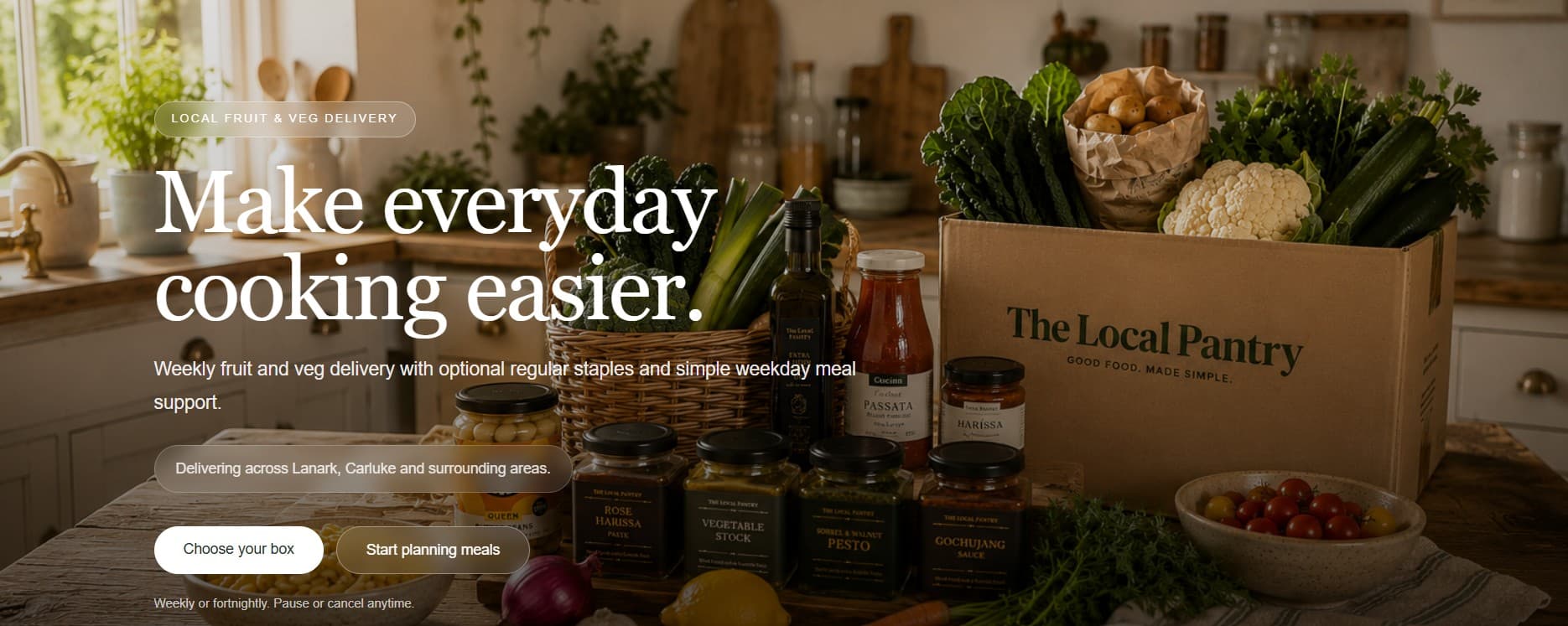
The challenge
The difficult part was not selling food online.
Food shopping is usually organised around products. Real households think differently: What will we eat? What do we already have? How busy is the week? What can everyone agree on?
The opportunity was to connect those decisions. The Local Pantry needed to support planning, discovery, recurring orders and account management as one continuous experience—while giving the business a clear operational view behind it.
The product had to reduce weekly decision-making, not simply add another place to shop.
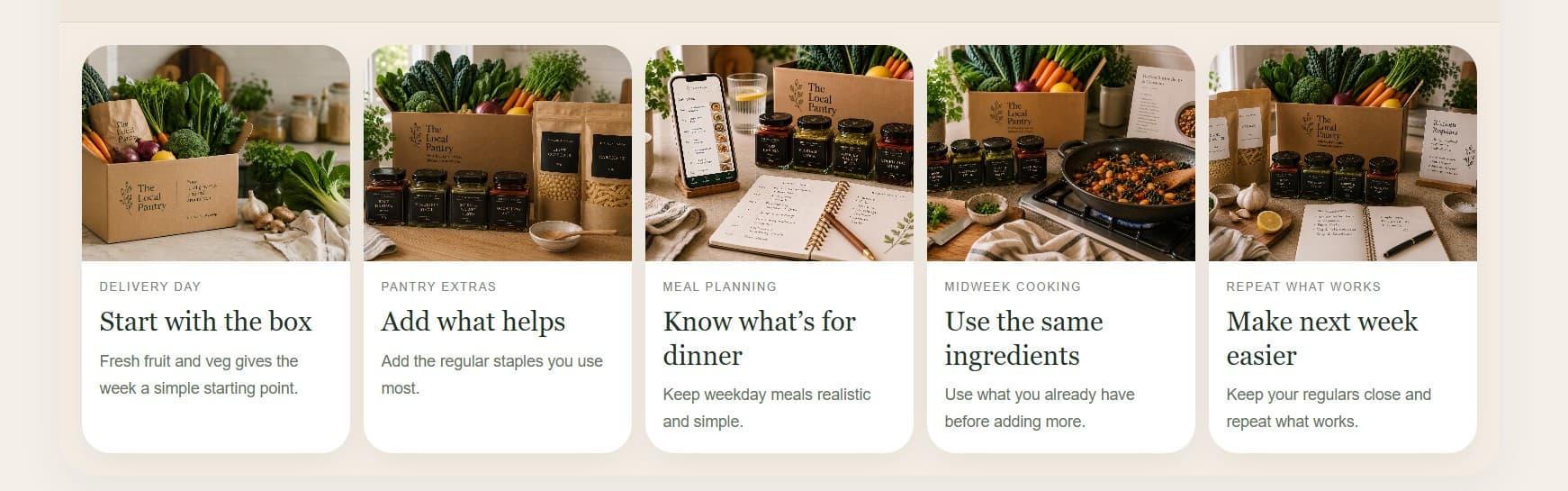
The product model
One connected weekly rhythm.
Each stage makes the next one more useful. Planning creates buying intent; buying supports the plan; saved choices make the following week easier.
- 01
Plan
Choose meals around the week ahead.
- 02
Gather
Turn those choices into the right ingredients.
- 03
Receive
Manage recurring orders, payment and delivery.
- 04
Return
Save what worked and make next week easier.
01 · Begin with intent
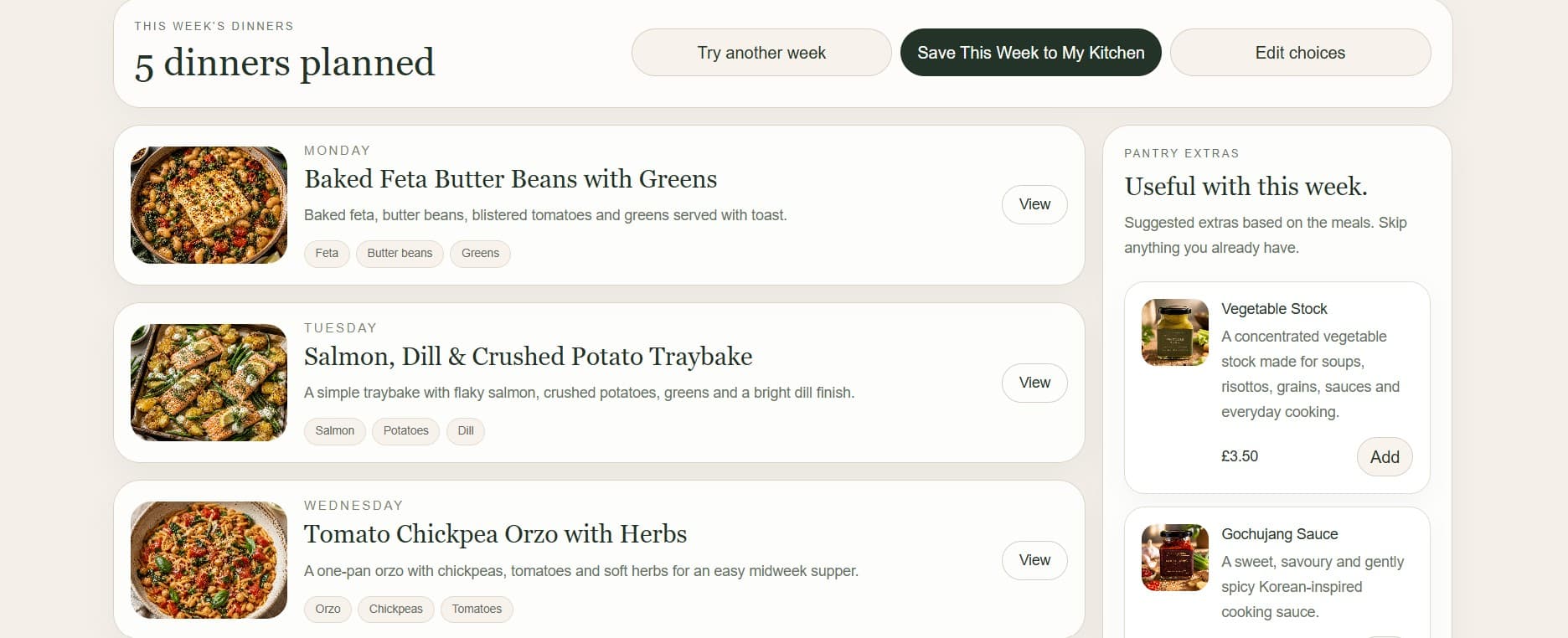
Plan the meals before filling the basket.
The planner reframes shopping around the week ahead. Customers begin with meals, rather than navigating an undifferentiated catalogue and trying to assemble a plan afterwards.
Guided choices reduce the blank-page problem and create a direct bridge between inspiration and the ingredients required.
- Designed for
- Faster decisions
- Connects to
- Ingredients and orders
02 · Connect the shop
Products appear with a reason to buy them.
The pantry is not a separate retail dead end. Product discovery remains tied to meals, household needs and the customer’s existing choices.
This gives browsing context and keeps the path from inspiration to order coherent.
03 · Make returning valuable
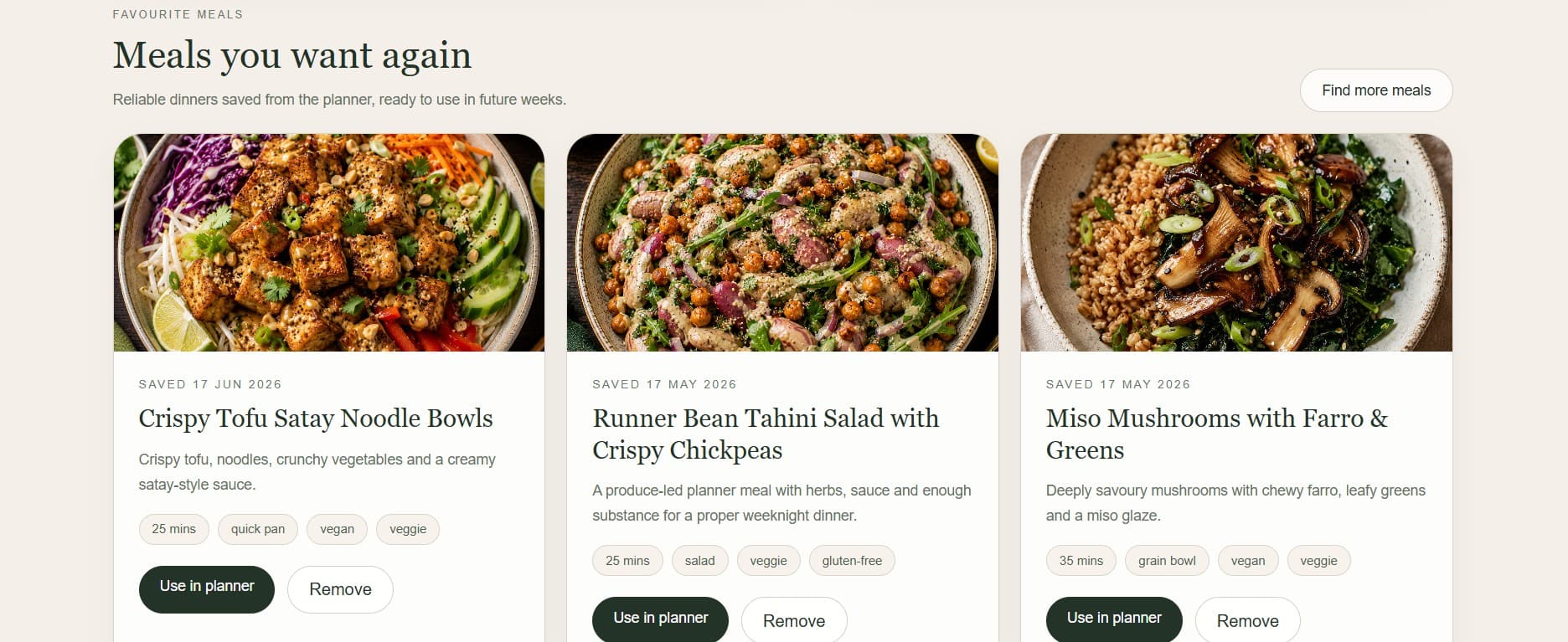
A customer account that remembers the useful things.
My Kitchen brings plans, saved choices and repeat ordering together. The account becomes working memory for the household rather than somewhere used only to change a password.
Over time, the product can ask less of the customer because it retains what already worked.
Both sides of the product
Calm for the customer. Capable behind the scenes.
Customer experience
- Meal planning and product discovery
- Accounts, saved choices and repeat orders
- Subscriptions and secure payments
- Responsive journeys across devices
Business operations
- Order and subscription visibility
- Payment and customer administration
- Product and content management
- A foundation designed to grow with the model
What I delivered
A product, not a collection of pages.
The work moved from business model and product structure through to the customer experience, visual system and operational foundations.
- Product strategy01
- Experience design02
- Visual identity03
- Meal-planning journeys04
- Subscription commerce05
- Customer accounts06
- Authentication07
- Stripe payments08
- Responsive design09
- Operational administration10
A project like this
What could work better in your business?
You do not need to know the answer yet. Start with the process, customer need or recurring problem that deserves a better way.